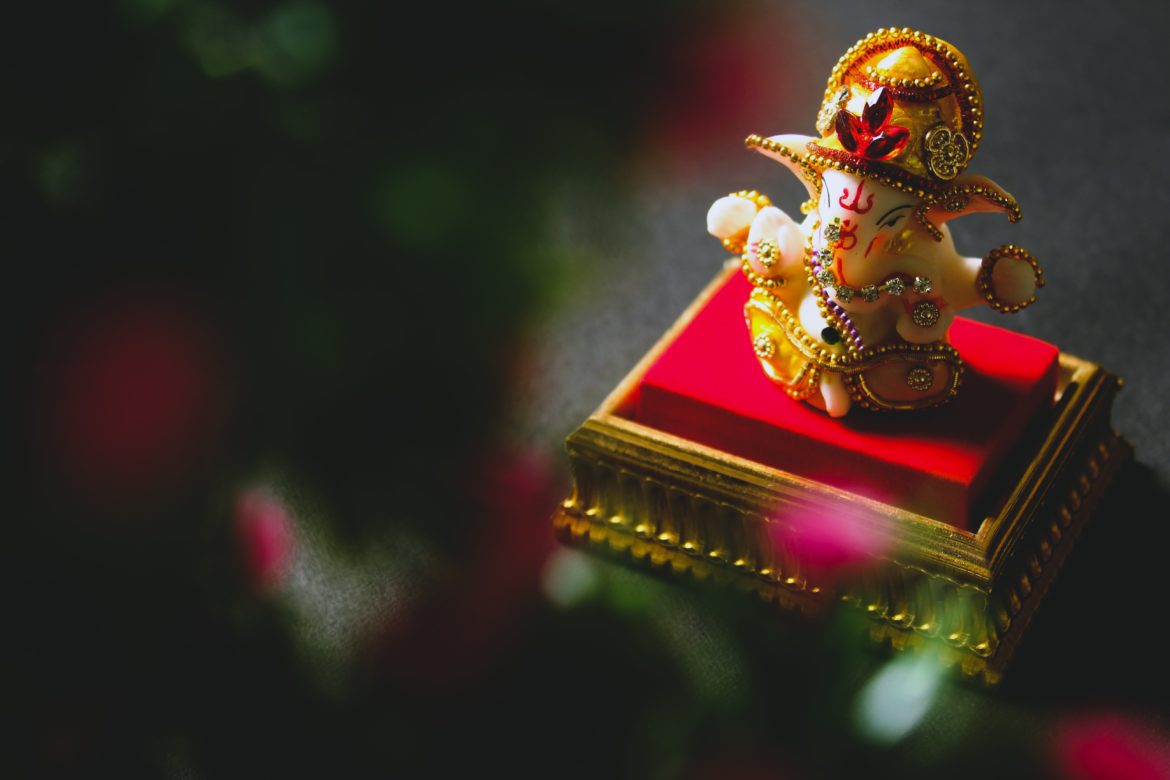
5 Learnings from the Ganeshotsav (Ganesh Festival )

Ganpati Bappa Morya!! Ganesh Utsav (festival) is celebrated in India every year. It is said that during these days Lord Ganesh visits earth to meet his devotees. During this time, the devotees worship Ganesha Idol by offering prayers, Prasad, and following certain rituals. Yesterday we welcomed Lord Ganesha in our family. This year due to covid19  in most of the cases, the celebrations will be restricted to small groups only.

In today’s article, I have shared my key learning derived from the rituals of these celebrations.

The preparation for this festival starts much before the actual festival begins. It starts with cleaning the entire house, shopping for the puja, booking the eco-friendly idol, etc. I realized there are a lot of things we can learn from these celebrations. Following are some of my takeaways from the festival.

  1. Follow the Rules: As mythology says, Lord Shiva made a rule that before anything auspicious people will pray Lord Ganesha (his son) first. Today also in India, every new project whether it’s entering a new house, office, factory, the job begins with a Ganesh Puja(Worship). As the story goes, Lord Shiva set the rule and in rush forgot his own rule and went for war. He started losing the battle which was very unlikely. While thinking about it, he realized that he forgot to worship Ganesh, his son before the war. He soon completed the ritual and as expected won the war against the demons.
    Learning: The rules are meant to be followed by everyone including leaders, Lead by example.
  1. Processes are for people: Most of the families follow a strict process for welcoming and worshiping Lord Ganesha in their houses. The prayers (Aarti) are offered at a fixed time every morning & evening. This process remains the same from generation to generation, except for some minor changes required based on the situation at times.
    Learning: The processes are not designed for people to follow, but they are designed to bring people together, so they can work together in sync towards a common goal of the organization. Thus leading to greater bonding among the team and achieving optimum use of time and other resources.
  1. Team Work: As mentioned earlier the preparation begins much before the actual festival begins. The entire family right from the youngest member of the family to the oldest member of the family is engaged. In activities of their choice, expertise, or activities assigned to them like decoration, Prasad, sending invitations, prayers, etc. Project Managers being our mothers/grandmothers.
    Learning: This is a classic example of driving teamwork, team engagement, and team bonding and aligns it with the mission of the organization.
  1. Humility & Modesty: We set our ego aside and work as a part of a team. No one of superior or inferior. Learning: Always respect fellow team members, never leave humility & modesty. You never know when circumstances will throw a curveball. Stay Humble always.
  2. Journey is as important as the destination: After the festival is over, it is the time to bid farewell to the Lord. This is a very painful moment and we wait for the festival next year to we can repeat the whole journey again.
    Learning: The people we meet and learning we acquire are equally important as reaching the destination. While evaluating the performance/ allocating a project, along with the goals accomplished/missed, it is also important to consider the learning/network employee has achieved on the way.

 Hope you like today’s article. To receive more such articles, then please subscribe to our blog – https://forms.gle/VHLNYzVoys4HbNfR9

              We’ll send over a quick weekly email with our latest blog posts.

5 team rituals during economic downturn.

Covid19, most of the business are facing a high level uncertainty as leaders having very less visibility about the future. This causes employee anxiety related to their job security. It becomes important for both to empathize with each other and work together, in order to come out of this crisis successfully.

“A team is not a group of people that work together, it is a group of people that trust each other. “- Simon Sinek.

This article is about top 5 team rituals, if followed consistently, can help companies fight and come out of this crisis.

  1. Challenge the status quo: In the situation of crisis, both teams and managers must, work hard to get rid of inertia of older ways of working. Leaving aside ego, perfectionism and old ways of working, think from customer’s perspective. What value we can offer as a team to the customer.
  1. Daily Communication: Communication has become even more vital in current scenario. Communicate with the team on regular basis to understand the new challenges they are facing. Explain the challenges the business is facing and make sure everyone is on the same page. It is very important for ever.
  1. Test & Measure: Try different new customer offerings that emerge out of the brainstorming sessions. Monitor the results and keep improvising.
  1. Do not micro manage: While the employees are working from home, do not micro manage. Manage the project and not the people. If the project is progressing and results are visible, why micro manage.
  1. Mutual Appreciation/Empathy: Don’t forget to thank your team or manager for their support. A genuine appreciation/thank you goes a long way to create a sense of responsibility and motivation.

To survive and thrive, persistence and consistency is the key. Persistence will get you there and Consistency will keep you there. Hope your found today’s article useful.

Please subscribe to our blog – https://forms.gle/VHLNYzVoys4HbNfR9 or visit our blog www.acesai.in/blog

We’ll send over a quick weekly email with our latest blog posts.

Top 5 Pillars to Build a Strong Employer Brand

Thank you very much for your encouraging response to my articles.

Employer Branding, whenever we hear this, we think of a cleverly crafted message to attract talent, fancy videos showing happy employees and happy workplace, career/social media pages on which is in line with the employer brand message, etc.

Employer branding means to be an employer of choice first, to create a great employee experience and later communicating it in a compelling manner via different mediums. Companies who get this right are extremely successful in drawing the best talent towards them and thus creating exponential growth.

There is nothing wrong with the marketing your employer brand, but this activity should be done after /in parallel with building a solid foundation for employee experience. Great branding with a poor foundation is a recipe for failure.

“Strong Foundation = Strong Brand “

In this article, I will highlight the 5 pillars of building a foundation for a strong and long-lasting employee experience/employer brand.

  • Solid HR Systems & Processes: Employee experience starts with a candidate who decides to apply for a job with your company. A systematic process designed keeping in mind employee experience, without losing the sight of the company’s vision is very important. Strong HR systems and processes right from hiring, onboarding, performance management system, etc is the first pillar for a strong employer brand.


  • Meaningful Employee Engagement: This involves meaningful involvement with peers and seniors to foster a culture of innovation. Top employers like Toyota, Google, etc have a system of discussing and documenting innovative ideas right from senior management, middle level to Front liners. They have a system to document, implement, and appreciate the innovative ideas of front liners. Of course, not all companies have a budget to support innovation on that scale, however meaningful employee engagement activities, where they get a sense that they are contributing to the larger vision of the company, increases employee satisfaction index to a great extent. Meaningful employee engagement which leads to growth and learning of both employee and employer is the second pillar.


  • Transparency in Communication: A Company is an ecosystem, with a variety of employees coming from different backgrounds. Every employee has something unique to offer to the company based on their education, background, experience, culture, etc. Open door policy where an employee can voice their ideas and concerns without the fear of being judged is the third important pillar.


  • Creating awareness about the vision of the organization: Clarity of company vision to the entire team up to the frontline staff. When the employees are aware of how they are contributing to the greater vision of the organization, there is a sense of belonging to the organization and greater satisfaction. Thus leading to achieve the company’s vision and mission.


  • Team bonding & Appreciation: This is little more than team building activities like learning together, playing together, etc. and employee awards. It is about developing a culture that encourages appreciation/ empathy/teamwork instead of blame/gossips/denial. This is a two-way thing; management cannot develop a culture of gratification without support from the team. Do not underestimate the power of a sincere Thank you from a colleague, boss, or family member. It instantaneously elevates your satisfaction and happiness. So a company where people are frugal in blaming/gossiping/denial and generous on appreciation/empathy is undoubtedly the best place to work.


I hope you find today’s article useful.  If you’d like more tips on building your Employer Brand, then please feel free to subscribe to our blog – https://forms.gle/VHLNYzVoys4HbNfR9 or visit our blog www.acesai.in/blog.

We’ve helped organizations right from startups to Multi-National Companies, build their employer brand. Contact us with your queries on contact@acesai.in, our HR experts will be happy to help.


We’ll send over a quick weekly email with our latest blog posts.

Teamwork in Covid19 Crisis- Empathy is the key.

Thank you very much for the encouraging response to my articles. The recent covid19 pandemic has stirred the air of uncertainty in our lives never before. Most of the Leaders in the companies are unclear of questions like, when is the lockdown going to end, what will be the impact on my business, what will be my team’s response, when will my business be able to restore the cash like good old days and so on. 

Today I will share my thoughts on the team handling in this crisis. There is a lot of chaos and crisis outside the organization, why not start by making things simple at our end. This simple incident will help understand the point.  

During the lockdown, most of us are working from home. One day, my daughter was continuously crying and asking for my attention. I was under a lot of pressure on office work and household chores. So I chose to ignore her and continued with my work. Thinking the situation will be handled on its own. However, this did not take place as expected and the discomfort of both of us kept on increasing. Finally, I took a break and talked to her. I tried to understand the problem from a child’s perspective. I understood the reason for her discomfort. Children are more used to outdoors and playing with friends. Suddenly due to pandemic situations, they are forced to stay indoors and entertain themselves with toys/games. They are working equally hard like us to adapt. Also, I tried to explain my situation in a way she could relate to. I finally engaged her with her favorite activity and continued with my work. Thus restored the situation to favorable. Now since I have a deeper understanding I can handle such future situations more effectively.

EMPATHY is what handled this situation. Both of us understood each other’s pain, of course, based on our capacity to understand and the situation got restored.

We can relate this situation to our business/careers also. So following are the key takeaways from this story:

Hiding head in the sand like an ostrich is not going to help: If we hide from the problem thinking that it will resolve on its own, is not going to help. The leadership and the team have to collectively work to come out of their comfort zone to handle the crisis.

Practice Empathy: Empathy is, after all, a human skill; you can get better and better by practicing it. Too often we underestimate the power of a smile, a kind word, a listening ear, an honest compliment, or the smallest act of caring, all of which have the potential to turn a life around.

Thus, if we practice the value of Empathy within our organizations, decision making, and work will become far more becomes less complicated. 

Hope you found this article a good read.  To view, our service offerings click on www.acesai.in/services